

For enterprise leaders, the priority is to identify where contextual AI can improve outcomes, establish clear boundaries for autonomous action, and measure impact rather than activity.
For the last few years, we have taught AI to answer various questions. It has also handled multiple roles with ease. Bring it in for a meeting and it returns tidy notes. Point it at a CRM, and it fills in the fields nobody had time for. That was the copilot era, and it was useful. The more interesting question now is a different one: Can AI understand the work we are actually trying to do, and be present while that work is happening?
Enterprise software is already moving in that direction, and the terminology has moved from assistants to agents and now to coworkers: systems that hold context, take part in workflows, and act on parts of a job. Whether that label survives is beside the point. The shift underneath it is real, and enterprise sales, with its long cycles, many stakeholders, and scattered knowledge, is a good place to see what it demands.
The cost of fragmented context
Enterprise sales runs on information, but that information rarely lives in one place. Account histories sit in the CRM; buying signals surface in emails and meetings; objections and decisions are buried in call recordings; and technical expertise lives in product documents or with a handful of specialists. The result is a gap between what an organisation knows and what its sellers can actually use when it counts. Salesforce's State of Sales 2026 report, based on a survey of 4,050 sales professionals across 22 countries, found that the average seller spends only 40 per cent of their time selling, and that 51 per cent of sales leaders, already using AI, say disconnected systems are slowing their AI initiatives. Gartner's findings are consistent: sellers using AI save an average of 4.8 hours a week, yet 72 per cent of sales organisations report low reinvestment of that time in high-value activities.
For example, analysing close to 30,000 hours of sales conversations in a single month will highlight how often execution gaps emerge from within the interaction itself. A deal may appear stalled in a CRM, but the conversation may reveal why: an objection was poorly handled, a qualification question was missed, or a customer’s underlying concern remained unresolved. Recording what actually happened creates visibility, but visibility alone does not change an outcome. The greater opportunity is to make organisational knowledge available when a decision is being made. The greater opportunity is to make organisational knowledge available at the moment a decision is being made.
From task automation to workflow intelligence
The difference between a copilot and a coworker comes down largely to autonomy, and autonomy is earned through trust. A copilot helps when asked; a coworker takes on longer-running work and contributes towards an outcome. That trust begins with the basics.
Consider an enterprise team maintaining detailed customer records, including numerical fields, sentiment scores and rules governing deal stages.
Representatives spent 15–20 minutes updating them after every call, but previous automation attempts had failed. Since other processes depended on those records, the output was sampled, reviewed and evaluated by humans until accuracy reached close to 99%. Only then was the automation deployed. This says more about enterprise AI adoption than any demonstration. Low-risk tasks can be delegated relatively quickly; pricing, negotiation and customer-facing communications require stronger safeguards. The human remains accountable for the outcome, which is why autonomy must expand in proportion to demonstrated reliability, not technical capability alone.
What the AI SDR cycle taught the industry
AI sales development representatives (SDR) once promised to automate outbound calling end-to-end. The logic appeared straightforward: cold calling was repetitive, and synthetic voices were becoming increasingly convincing. Customers, however, did not necessarily welcome the experience. Some screened calls or asked outright whether they were speaking to an AI. I make cold calls for my own company occasionally, and I have been asked that question myself. The lesson is that the ability to automate a task is the wrong test. The better question is whether doing so advances the business objective and creates an acceptable customer experience.
Some of AI’s more durable applications are internal-facing: researching accounts, identifying dormant opportunities, improving CRM accuracy and coaching representatives. Coaching is particularly promising. AI can identify how objections and pricing discussions are handled across conversations, compare them with established best practices, and show representatives where their approach could improve.
Contextual role-play can then help them practise specific situations rather than rely solely on periodic feedback from a manager. The same principle applies to live assistance. Early prototypes of AI systems that spoke during calls drew a consistent response from customers: start with text prompts visible only to the representative. Capability was not the constraint. Adoption depended on fitting the way people actually work.
Seeing opportunities at scale
A coworker should do more than respond when asked. Imagine a sales team with 10 active customer conversations and 15 similar companies it has never approached. A context-aware system could identify what is working, find relevant accounts, and suggest how to open those conversations. It could also detect quieter signals within existing relationships, such as recurring concerns, changing requirements, or dormant accounts worth revisiting.
A person can spot these patterns across a handful of accounts, and in doing so consistently across hundreds requires information to remain connected and current. This is why I believe context, rather than raw model intelligence alone, will become a lasting source of differentiation in enterprise AI. As capable models become more widely available, an
organisation’s advantage will increasingly depend on how well its systems understand its customers, workflows, relationships and decisions. That could change how enterprise software is used.
For decades, employees have had to navigate systems, locate records and assemble reports themselves. A coworker model points towards software that understands the intent behind a task and brings the relevant information together, allowing people to focus on decisions rather than the mechanics of finding information.
The human remains accountable
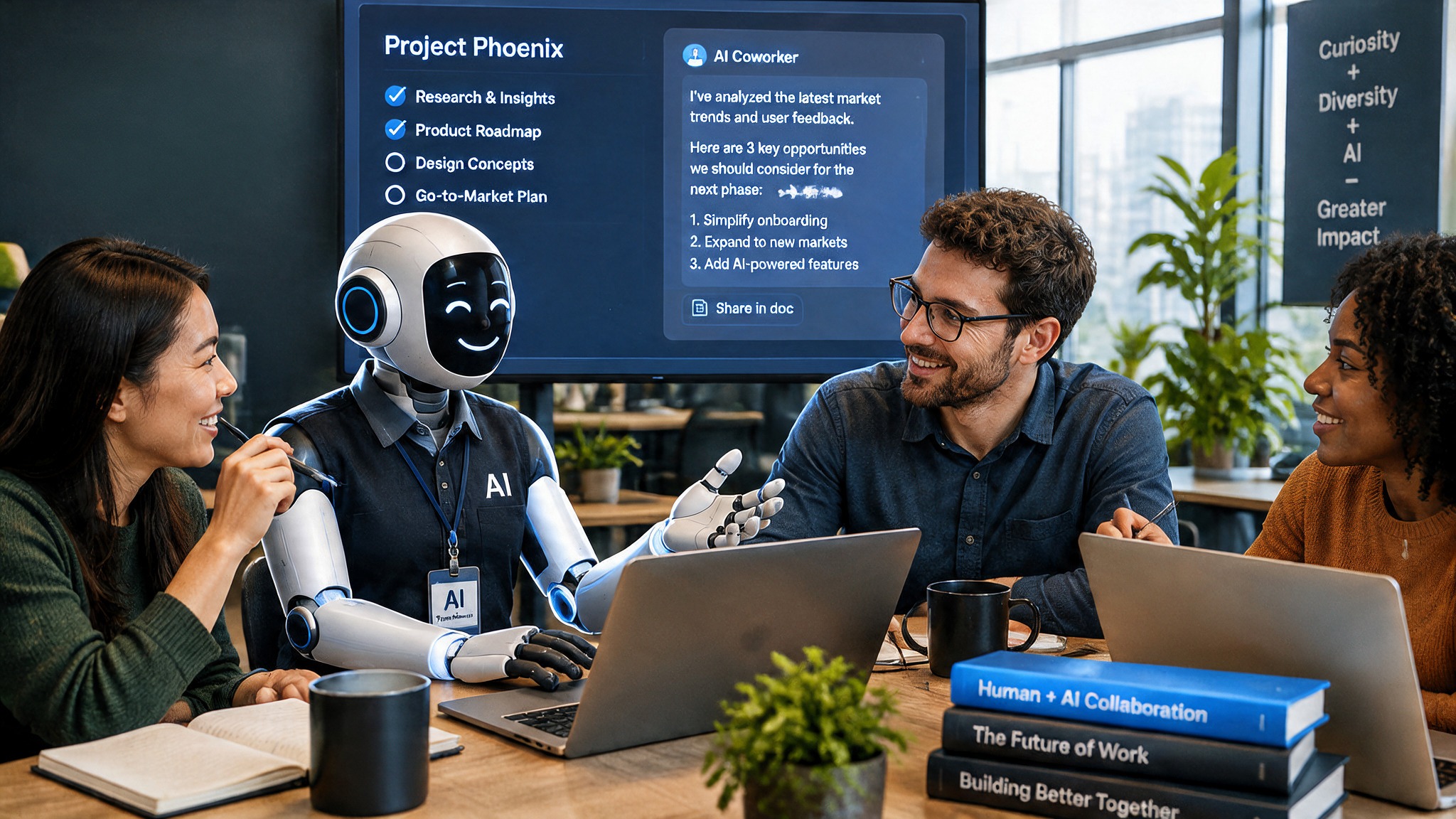
We are not approaching a future in which people stop selling to people. Trust, empathy and negotiation will remain central to enterprise sales. The AI coworker’s role is to accompany people into critical conversations, provide relevant context and help them make better decisions, not take over the relationship
For enterprise leaders, the priority is to identify where contextual AI can improve outcomes, establish clear boundaries for autonomous action and measure impact rather than activity. Organisations will also need visibility into what these systems do and whether their work creates measurable value. The future of enterprise sales is not humans versus AI. It is people working alongside systems that understand the work, earn trust through reliable performance, and make expertise available when it matters most, present in real-time conversations.
The author is the Founder and CEO of Proshort AI. Views expressed are personal.