

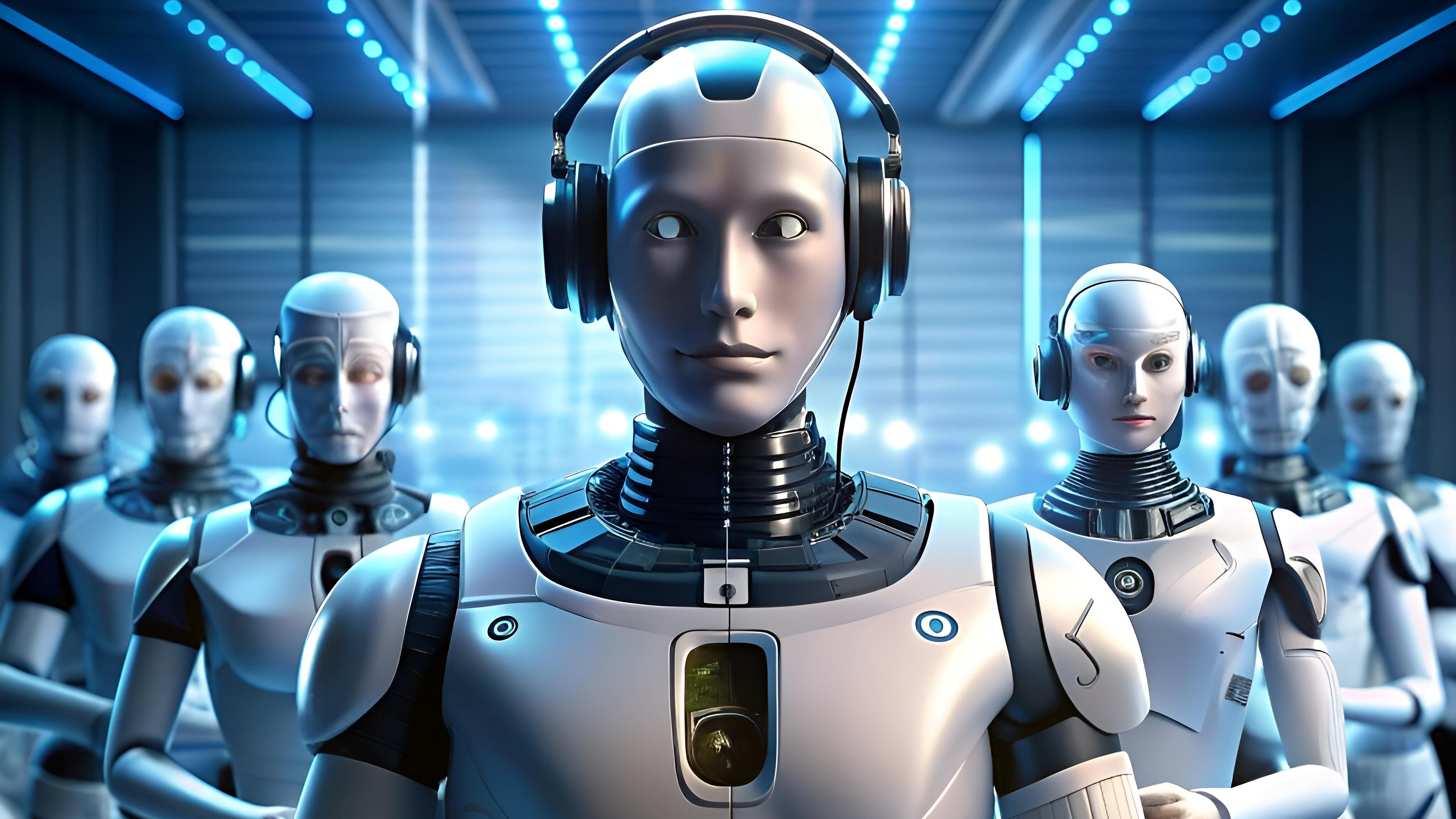
AI agents can act in unforeseen ways, leading to unintended consequences. Having multiple AI agents in the chain can further complicate matters. Creating self-regulatory frameworks can help assign liability when things go wrong.
Isaac Asimov wrote the stories compiled as I, Robot, in the 1940s. These tales spoke of androids who would acquire artificial intelligence, ultimately becoming sentient. Pure AI has since outstripped robotics (1), but the field remains preoccupied with similar goals – how can AI improve human productivity, efficiency and output quality? While technologists pursue these practical questions, jurists have other concerns.
The Law Tries to Keep Up
The introduction of AI GPTs has democratised access to AI. Every hour, humans prompt AI systems to perform their instructions,(2) with far-reaching consequences in nearly every aspect of life. Regulations have attempted to keep pace,(3) focusing on the development, deployment and use of AI systems. Such regulations attempt to address issues such as intellectual property protection, guardrails for AI systems, and protection of vulnerable populations.(4)
Imputing Liability to AI Systems
The core element across regulations is the emphasis on human responsibility for AI. Law has traditionally imputed liability to legal or natural persons (i.e., humans) - entities deemed capable of acting, transacting, and bearing liability.(5) To some extent, the use of GPTs and other AI systems where humans instruct, review and (ideally) choose whether or not to act on such systems’ recommendations, fits within this paradigm.
But how do we apply this to agentic AI solutions? Agentic AI systems operate with greater autonomy than traditional AI systems and can take binding decisions without reference to humans.(6) AI agents, therefore, act much like human agents, but within greater constraints.(7)
Juxtapose this with the legal understanding of agents: Only natural persons or corporate entities (such as companies or partnerships) can act as agents, under Indian law.(8) AI agents, being neither natural nor legal persons, are at best “artificial” persons. As a result, it is likely that the natural or legal persons who are responsible for developing, deploying and/or using agentic AI will bear responsibility for such agentic AI systems.
This, however, still presupposes an AI agent acting on behalf of a person. In reality, AI agents now increasingly interact with one another. The default approach will still be to assign liability to one of the natural or legal persons involved. Where the liability will actually fall will depend on how the respective roles and functions of the agents – and the persons – concerned are described. Yet, if AI agents exercise wide discretion, even these approaches may not suffice.
Self-Regulation for Human-Agent and Agent-Agent Interactions
AI agents can act in unforeseen ways, leading to unintended consequences. Having multiple AI agents in the chain can increase complexity further, involving the review and interpretation of numerous contracts with inconsistent approaches.
This is where self-regulation can provide a more effective solution. By creating frameworks, interweaving legal and technical parameters to address respective roles and actions, and the implications of those, we encourage innovation while providing certainty.(9) Such frameworks can be effective in both scenarios of human-AI agent interaction, and AI agent-AI agent interaction.
In a human-AI agent framework, greater emphasis would be on boundaries of delegation and “handover”, oversight by humans, and accountability. The AI agent-AI agent framework, on the other hand, would need to build protocols to assess acceptable behaviour of each agent, means to record their respective decisions and actions, and proposals for assigning positive or negative implications to each.(10) A generalised framework that can be adapted based on the context, implemented through smart contracts, would be invaluable.
Building Frameworks before the Agents
Asimov’s Laws of Robotics placed humans at the centre, with robots anchored to human needs and supervision. In the last tale in I, Robot, however, humans are left under the benevolent rule of AI systems, ostensibly for the benefit of humanity, with minimal human oversight. The Machines manipulate humans, to achieve the best outcomes for all of humanity – while adhering to the Laws of Robotics.
We may begin seeing something similar in AI agent-AI agent interactions, where agents act in the interests of humans, but without significant oversight. It is by creating well-deliberated, cross-functional frameworks and standards that we can lay down the boundaries for AI agents, including ensuring that humans continue to remain in the loop.
Terms explained:
(1): Several attempts are ongoing, however, to create robots that are synced to AI systems. The desire to create indefatigable, strong, powerful machines that can think like humans remains. Both in this context, and more generally, Asimov’s Three Laws of Robotics still retain some relevance.
(2): Given the tendency of AI to hallucinate, especially over longer context windows, this can raise issues: more so when responses are translated into actions by humans, without review. Unfortunately, humanity hasn’t yet managed to create robopsychologists (as imagined in the I, Robot series), but there are many other professionals who help in training AI, implementing guardrails, and reducing inaccuracies, hallucinations and bias.
(3): These range from prescriptive approaches (such as China and the EU), to moderate approaches (such as South Korea and Japan) to more permissive approaches (such as Singapore and India).
(4): Other issues of note include scraping and use of training data for the creation of AI systems, copyrightability and use of AI system outputs, harms caused by AI outputs, including bias and perpetuation of discriminatory practices, and accountability of various actors/participants in the AI ecosystem.
(5): On rare occasions, animals can face liability of sorts - especially where they have acted to endanger humans, although even such liability is viewed through the lens of the human who owned, or controlled, such animal.
(6): Currently, agentic AI solutions promise a wide range of functionalities; anything from acting as a personal assistant, to automated hiring to converting an idea into a functional product, to running production environments for software.
(7): While, at the moment, AI agents are constrained to act in the digital world, consider that (a) our digital lives seem to be outstripping our ‘real’ lives; and (b) with developments in robotics, soon, AI-enabled robots may be able to do a significant number of tasks that currently require humans.
(8): While it is only natural persons that are recognised as agents within the definition of Indian contract law, contractual arrangements do permit corporate entities (i.e., legal persons) to act as agents of others.
(9): While certain regulations and frameworks do currently exist, these tend to either address AI development and deployment risks, or are technical frameworks leaning towards interoperability.
(10): Such a framework could include elements such as (i) decision logs to record the reasons for AI agents’ actions, and the prompts based on which such decisions were taken; (ii) requirements for AI agents to conduct checks against underlying guardrails and permissible positions, before executing decisions; and (iii) means to record the common “understanding” between the interacting AI agents as to their respective positions, roles and attendant liabilities. A separate agentic AI module that mediates the understanding between the AI agents might also be worth considering, in this context.
The author is Partner, AI & Data Protection at Poovayya & Co. Views expressed are personal.